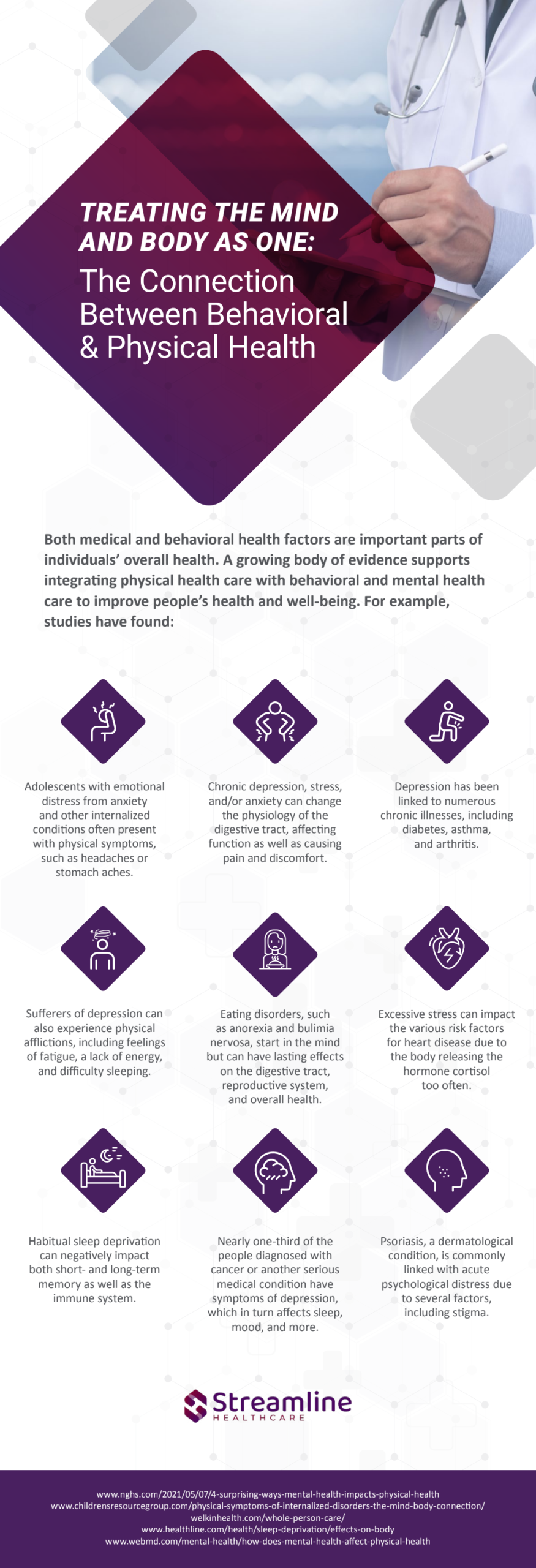

Physical symptoms and emotional well-being are closely connected. Stress may interfere with sleep, chronic pain can affect mood, and depression can make everyday health routines harder to maintain. Looking at the body as a connected system can help women recognize patterns that might be missed when physical and behavioral concerns are treated separately.
Stress Does Not Stay in Your Head
Stress triggers measurable physical responses. The body releases hormones such as cortisol and adrenaline, which can increase heart rate and temporarily alter other functions.
Short periods of stress are part of life. Persistent stress is different. Poor sleep, muscle tension, headaches, digestive problems, and changes in appetite may occur alongside emotional symptoms.
That connection matters during medical appointments. Discussing ongoing stress or anxiety with a healthcare provider may provide useful context for physical symptoms rather than leaving an important part of the picture unexplored.
Physical Health Can Change Behavior
The relationship also works in reverse. Chronic pain, diabetes, heart disease, hormonal changes, and other medical conditions can affect daily routines and emotional well-being.
Consider someone managing persistent back pain. Pain may interfere with sleep, which leaves her exhausted the following day. She exercises less because movement hurts. Social plans become easier to cancel. Over time, those changes may contribute to isolation, stress, or a lower mood.
Everyday Habits Offer Important Clues
Changes in sleep, appetite, exercise, medication use, alcohol consumption, or social activity can reveal connections between behavioral and physical health. Patterns matter more than an isolated bad day. Several weeks of poor sleep accompanied by headaches and irritability, for example, provide more useful information than treating each symptom as an unrelated event. Keeping brief notes about symptoms, routines, medications, and mood can make those patterns easier to discuss with healthcare professionals.
Better Communication Connects Care
Care can become fragmented when several providers are involved. A primary care physician may focus on physical symptoms while a behavioral health professional sees changes in mood, sleep, or coping behaviors.
Shared information can help connect those observations. An EHR platform can give authorized healthcare professionals access to relevant clinical information, although effective coordination still depends on providers communicating and patients discussing changes openly.
Health rarely fits neatly into separate physical and behavioral categories. A sleep problem may affect mood, while anxiety may worsen physical symptoms. Paying attention to these connections can help women describe what they are experiencing more clearly. Look over the infographic below for more information.