
Self-employment can give families more control over schedules and earning potential, but it removes some of the predictability that comes with a traditional paycheck. Revenue may arrive unevenly, taxes are not automatically withheld, and benefits often become a household expense. A good financial system accounts for those differences.
Give Yourself a Regular Paycheck
Business revenue and household income should be treated as two different numbers. If $8,000 enters the business account this month, that does not necessarily mean $8,000 is available for groceries, housing, and other personal expenses.
Consider paying yourself a consistent amount based on typical earnings rather than transferring money whenever revenue arrives. During stronger months, excess funds can remain in the business to cover operating expenses or help support your regular pay during slower periods.
Build a Budget Around the Quiet Months
Families with variable income can benefit from looking at the lower end of their typical monthly earnings. Core expenses such as housing, utilities, groceries, transportation, and debt payments should ideally fit within a conservative income estimate.
This creates breathing room during stronger months. Extra income can then support savings, irregular household expenses, or longer-term goals instead of immediately raising the family’s standard monthly spending.
A larger emergency fund may also make sense for a self-employed household. Job loss is not the only financial risk. A major client could leave, invoices could arrive late, or illness could temporarily reduce someone’s ability to work.
Treat Taxes Like a Monthly Expense
One of the easiest self-employment mistakes is treating money reserved for taxes as available cash. Setting aside a percentage of income as payments arrive can reduce the shock of estimated tax deadlines. Tax needs vary based on business structure, income, deductions, and state requirements. A tax professional can help determine an appropriate amount and whether quarterly estimated payments are required.
Replace the Benefits an Employer Would Provide
Self-employed families may need to independently arrange health insurance, retirement savings, disability coverage, and life insurance. These costs belong in the household plan alongside other recurring obligations. Insurance decisions should be based on the family’s actual financial exposure. Someone researching whole life insurance quotes online, for example, should compare more than monthly premiums.
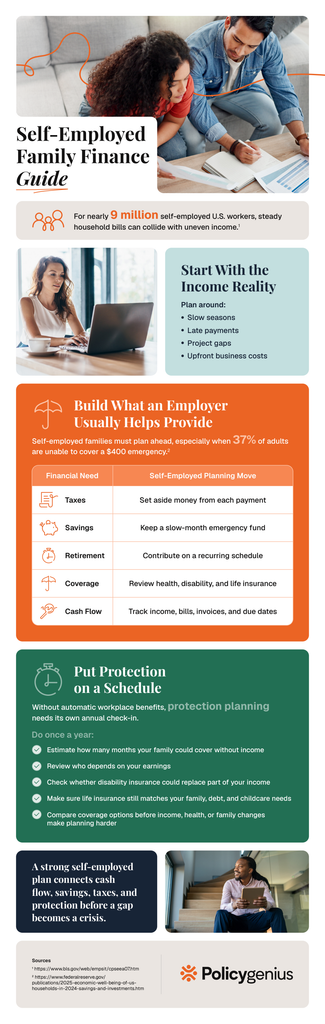
Self-employment makes household finances less automatic, but they do not have to become unpredictable. The goal is to build a household budget that can handle the natural ups and downs of working for yourself. Look over the infographic below to learn more.