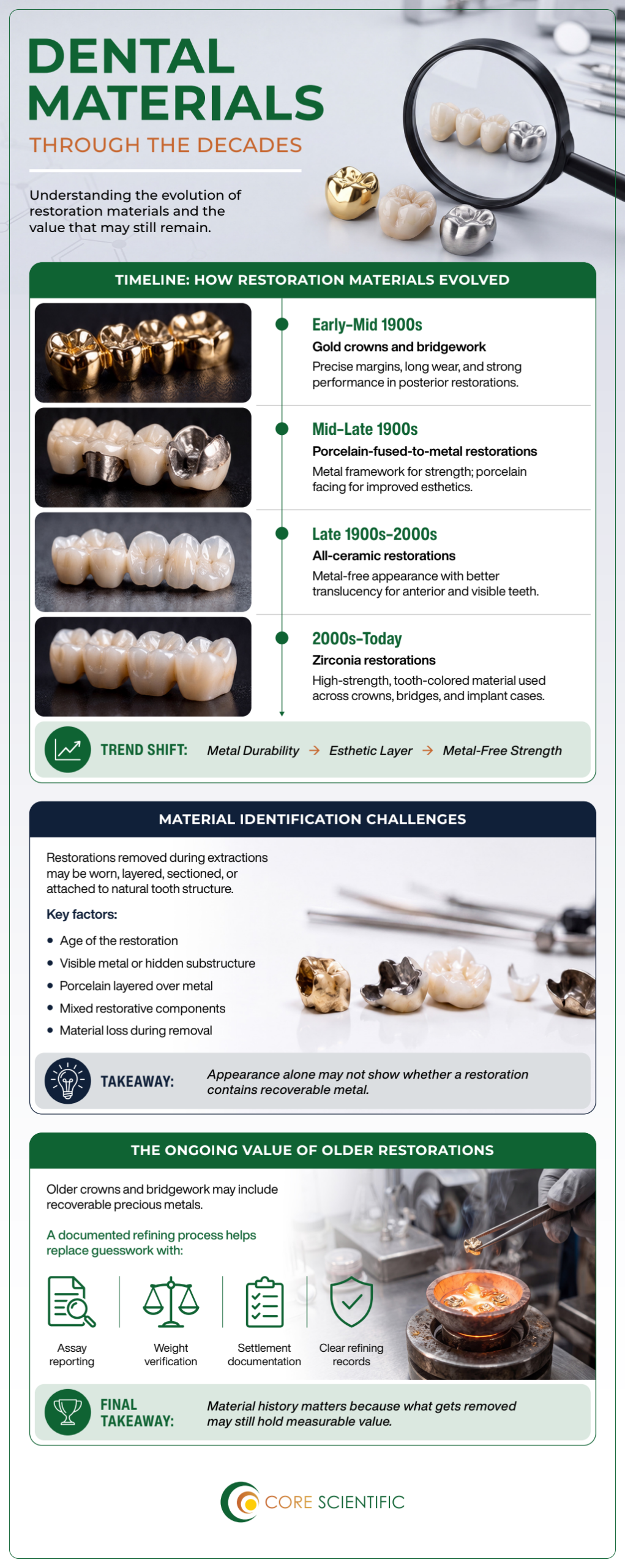
Dental restorations have changed considerably over the past century. Materials once chosen mainly for strength have been joined by options that can closely resemble natural teeth. Looking back at fillings, crowns, and other restorations shows how dentistry has balanced durability, appearance, cost, and patient needs over time.
Gold Earned an Early Reputation for Durability
Gold has a long history in restorative dentistry. Gold alloys were commonly used for crowns, inlays, and onlays because they could withstand chewing forces and resist corrosion.
Their distinctive appearance eventually became a drawback for patients who preferred restorations that blended with surrounding teeth. Still, old dental gold can contain precious metal, which explains why someone replacing a restoration might wonder how much is a gold crown worth. Its value depends on factors such as weight and the composition of the alloy.
Amalgam Became a Familiar Filling Material
Dental amalgam became widely associated with cavity treatment during the 20th century. Often called a silver filling because of its appearance, amalgam is actually an alloy containing mercury combined with metals such as silver, tin, and copper.
Its durability and relatively low cost made it practical for restoring back teeth exposed to significant chewing pressure. Its metallic color, however, made it highly visible.
Tooth-Colored Materials Changed Expectations
Composite resin provided dentists with another option for restoring cavities. Unlike amalgam, composite can be matched to the approximate shade of a patient’s tooth.
Composite materials also bond to tooth structure, which can influence how a dentist prepares and restores a damaged area. These materials have improved over time, expanding their use across different types of restorations.
Ceramics Brought Strength and Appearance Together
Ceramic materials have become important in modern crowns, veneers, and other dental restorations. Porcelain has long been valued for its natural appearance, while newer ceramics such as zirconia offer considerable strength.
No single material is automatically right for every tooth. Dentists may consider the restoration’s location, remaining tooth structure, bite forces, appearance, and a patient’s habits when recommending a material.
Dental materials tell a broader story about changing priorities in oral care. Gold and amalgam became established largely because they performed reliably, while composites and ceramics expanded the possibilities for natural-looking restorations. Older materials have not simply disappeared, either. Several continue to have useful properties. For patients, knowing what a restoration is made from can make conversations about repairs, replacement, longevity, and appearance much more productive. Check out the infographic below to learn more.