A guest may not be aware of the designer’s identity, the furniture budget, the seating arrangement, or the specific reason a dining room seems wonderful. They may not comprehend why one restaurant is calm, balanced, and memorable while another appears put together, even if both serve wonderful food. However, most guests can quickly detect intent.
The detail that reveals it is spacing.
Not the wall color. Not the logo. Not the pricier light fixture above the host stand. Spacing can reveal the truth faster than practically anything else in a restaurant. It demonstrates whether the operator considered how customers arrived, sat, moved, talked, ate, paid, and left. It tells whether the room was designed for guest comfort or just crammed with as many seats as feasible.
That is why the choice and placement of tables and chairs for restaurant spaces should never be treated as a simple purchasing decision. They shape walking paths, server access, guest privacy, table turnover, and the overall sense of ease inside the room.
This is especially important now, as restaurants compete in a market where the physical experience has become an integral part of the product. The restaurant business in the United States is expected to generate around $1.55 trillion in sales by 2026, yet operators continue to face low margins, labor pressure, and discriminating guests. In that climate, every square foot must work more. Spacing is where design, revenue, comfort, and service intersect.
Spacing Is the Silent First Impression
A guest reads the room with their body before they taste a thing.
They check whether the host stand is packed. They think that the aisle was broad enough to stroll through without bumping against a table. They can tell if the chair slides out easily, if the booth is private, if servers can get by without interrupting a conversation, or if the space is filled nicely or crammed in a stressful way.
A badly spaced restaurant is often announced before the menu. Chairs hit the walls. Guests are crammed past diners at tables. Servers twist sideways with trays. Nowhere to put bags and coats. Two-top tables seem overly exposed, and large tables disrupt the flow of the space.
The weird thing is that guests may never comment, “The spacing is bad.” Instead, many report the restaurant is uncomfortable, loud, hasty, crowded, or inappropriate. The design challenge turns into an emotional assessment.
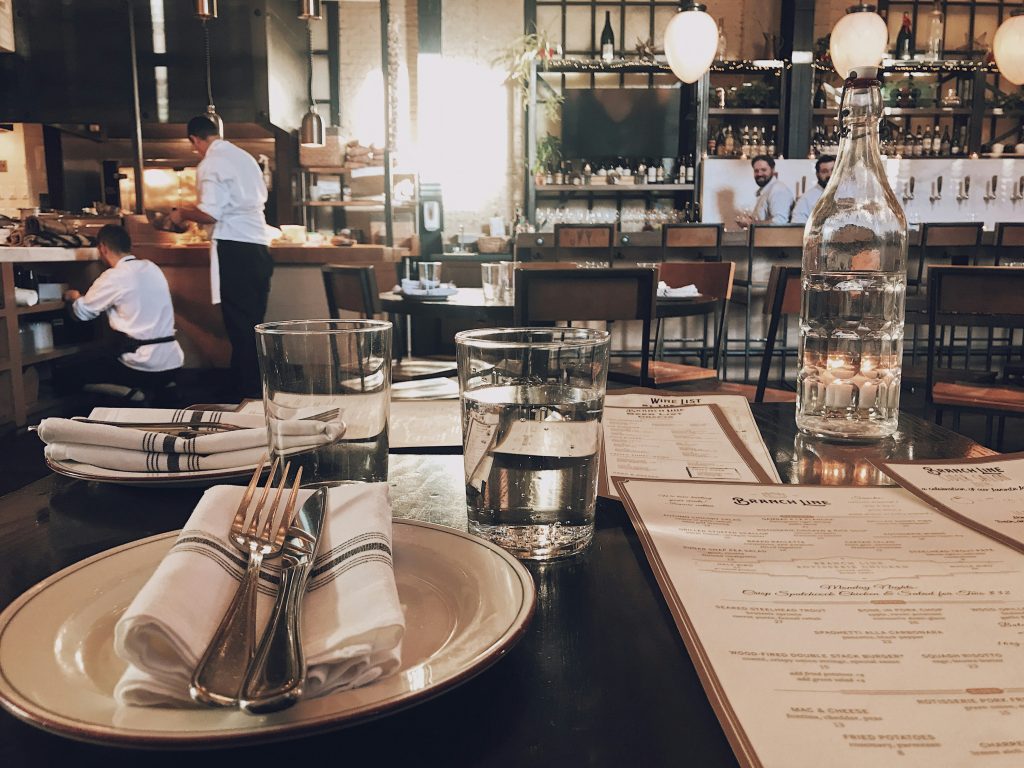
A well-spaced restaurant creates the opposite feeling. It gives guests the feeling that someone thought about the experience before they arrived. The space might still be alive, packed and vibrant, but it doesn’t feel reckless. Plenty of room to maneuver, plenty of proximity to create mood, plenty of separation for comfort.
The Difference Between Full and Forced
Every restaurant owner understands the pressure to maximize seats. More seats can mean more covers, reservations, checks, and sales potential. On paper, squeezing in another table can look logical.
In real life, the room pushes back.
A restaurant can be full without feeling forced. That is the mark of careful planning. Guests feel surrounded by energy, but not trapped by it. Servers stay efficient. Food runners move with confidence. Hosts can seat guests without rearranging half the room. A busy dining room feels alive rather than overloaded.
Forced spacing creates a different message. It tells guests that revenue was prioritized over comfort. Even when the food is excellent, the room can make the experience feel less generous. A diner who cannot move their chair without hitting another guest may not stay for dessert. A couple seated inches from another conversation may skip the second drink. A family squeezed into a tight corner may remember the discomfort more than the meal.
This is why spacing is not just a design detail. It is an operating decision.
Restaurants do not only sell food. They sell the feeling of being taken care of. When the layout respects the guest’s personal space, the service begins before a server says hello.
Where Intention Shows Up Most Clearly
The most revealing areas are often not the most decorative ones. Intention shows up in the practical spots that guests and staff use constantly.
A smart layout pays attention to:
- The space between chair backs when guests are seated
- The width of server paths during peak service
- The distance between booths, walls, columns, and service stations
- The way guests move from the entrance to the table, restroom, bar, and exit
These choices may sound simple, but they shape the entire mood of the restaurant. A room with beautiful finishes can still feel badly designed if guests have to squeeze through it. A modest room can feel polished when the spacing is calm, logical, and comfortable.
The best operators understand that design is not only about what guests see. It is also about what guests do not have to think about. They do not have to worry about knocking into someone. They do not have to shift their chair every time a server passes. They do not have to speak louder because neighboring tables are too close.
That ease is what makes a space feel intentional.
Furniture Choices Can Make or Break the Plan
There is no spacing outside of furniture. The chair width, booth depth, table size, base shape, and bar stool footprint all influence how the room functions.
A dining room can seem just right on a floor plan, only to feel crowded if big chairs, huge table tops, and wide bases are added. But the opposite can be true too. Properly scaled commercial furniture can allow a restaurant to comfortably seat visitors without wasting precious square space.
This is where many operators are startled. They measure the room. They count the tables. They chose furniture largely for style. Then, the daily service discloses the latent trouble. The chair looks fantastic; however, the arms make the aisle too tight. A table foundation can be solid, but it gets in the way of guests’ feet. A booth can appear posh, but it encroaches on the walkway behind it.
Restaurants that are intentional choose furnishings as part of the layout, not after.
The aim is not to make everything smaller. The idea is to match each item to the duty it performs. A high-volume café, a fine-dining room, a local pub, and a family restaurant all demand different approaches to space planning. The same square footage can feel spacious or cramped based on how furniture allows for movement.
Service Flow Is Part of the Guest Experience
Guests may not consciously study service flow, but they feel its effects.
When servers have clear paths, service runs more smoothly. Drinks arrive faster. Plates are cleared with less disruption. Staff can check on tables without having to squeeze between guests. The room feels more confident because the team can move naturally.
When the flow is poor, stress becomes visible. Servers hesitate. Guests lean away from passing trays. Chairs need constant adjusting. Bottlenecks form near the kitchen, bar, restroom, hallway, or payment station. Even if the staff is skilled, the layout works against them.
A restaurant built with intention protects both the guest and the team. It recognizes that hospitality is physical work. People carry hot food, glassware, trays, menus, cleaning supplies, and payment devices through the same space where guests relax. Good spacing gives everyone room to do their part without conflict.
That kind of planning affects revenue, too. A smoother room can turn tables more naturally, reduce service mistakes, and help staff maintain energy during long shifts. Comfort and efficiency are not enemies. In the best dining rooms, they support each other.
The Social Media Test
Today, restaurant spacing also affects the room’s appearance online.
Guests snap pictures of food, cocktails, booths, table settings, birthday meals, date nights, and casual lunches. A restaurant doesn’t control every photo, but it does control the atmosphere in which those photos are taken. Too tight a spacing can make images look cluttered, congested, or confused to the eye. The thoughtful spacing makes the restaurant simpler to shoot from practically any angle.
That is not to say every restaurant needs to become a social media set. Overly prepared environments might, in fact, feel artificial. The most powerful technique is to create a room that is, by nature, photogenic for its balance in real life.
Adequate breathing room around tables makes furniture lines look cleaner. Photos are less busy when the aisles are clear. Visual rhythm is created when booths, seats, lights, and table tops work together. They might not call it that, but the guests respond to it.
In an age when many customers check out images before deciding where to eat, the layout of a dining room is now part of a restaurant’s public reputation.
Why Guests Remember the Feeling
A guest may forget the exact table number. They may forget the server’s name. They may even forget one dish in a multi-course meal.
They rarely forget how the restaurant made them feel.
Spacing plays a quiet role in that memory. It affects whether a guest feels relaxed or rushed, welcomed or processed, comfortable or boxed in. It influences how long people stay, how freely they talk, how much they order, and whether they picture themselves coming back.
The strongest restaurant interiors do not look accidental. They feel composed. Every chair, table, booth, aisle, and transition has a reason. Nothing feels random, even when the room is casual and lively.
That is the power of intention. It does not have to be loud. It does not need to announce itself through luxury materials or dramatic design gestures. Sometimes, it is as simple as giving people enough room to enjoy the experience they came for.
The Detail That Says Everything
Spacing is one of the clearest signs that a restaurant was designed with care. It reveals whether the owner thought beyond capacity and considered comfort, service, movement, photography, atmosphere, and memory.
A restaurant can survive with average spacing, but it rarely feels exceptional with careless spacing. Guests can sense when a room has been packed instead of planned. They can also sense when every seat belongs exactly where it is.
That is why spacing tells the truth.
It shows whether the restaurant was built only to hold guests or to host them.