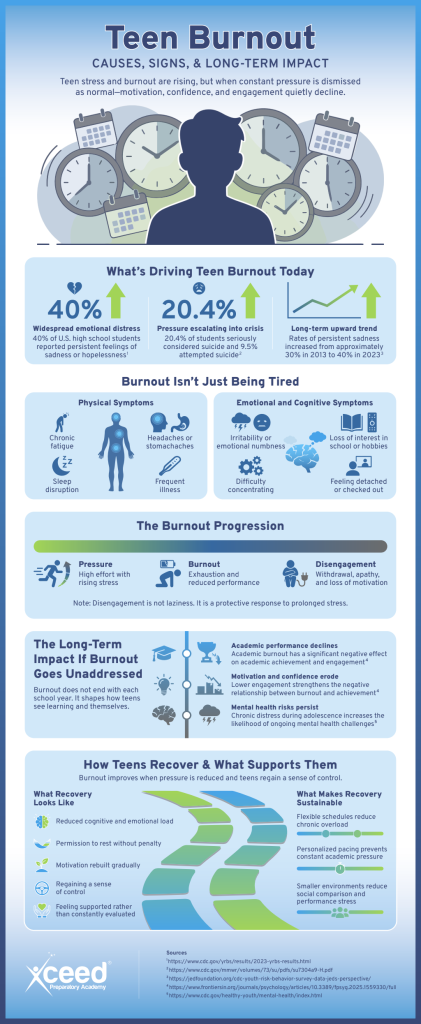

Teenagers today face a unique combination of academic expectations, social pressures, extracurricular commitments, and constant digital connectivity. While occasional stress is a normal part of adolescence, chronic and unmanaged stress can lead to burnout. Once associated primarily with adults in demanding careers, burnout is increasingly affecting younger populations, including middle school and high school students.
What Causes Teen Burnout?
Burnout develops when ongoing demands consistently exceed a person’s ability to recover. For many teenagers, academic pressure is one of the primary contributors.
Students often juggle challenging coursework, standardized test preparation, extracurricular activities, volunteer commitments, and part-time jobs. Competition for college admissions can further increase stress levels. This pressure can affect students in many educational settings, including public institutions and private schools, where high achievement expectations may be common.
Social factors also play a role. Adolescents are at a stage where peer relationships and social acceptance carry significant importance. Conflicts with friends, bullying, and concerns about fitting in can create persistent emotional strain.
Technology adds another layer of pressure. Social media platforms expose teens to constant comparisons, unrealistic standards, and a continuous flow of information. Unlike previous generations, many teenagers have limited opportunities to fully disconnect from academic and social demands.
Insufficient sleep is another major factor. Many teens do not get the recommended eight to ten hours of sleep per night. Sleep deprivation reduces resilience, making it harder to cope with daily stressors.
Common Signs of Burnout in Teenagers
Burnout often develops gradually, making it difficult to identify during its early stages. One of the most noticeable signs is persistent fatigue. Unlike normal tiredness, burnout-related exhaustion does not improve significantly with a good night’s sleep or a weekend of rest.
Academic performance may begin to decline. Students who were once motivated and engaged can lose interest in schoolwork, struggle to concentrate, or procrastinate more frequently. Assignments may feel overwhelming, even when they were previously manageable.
Emotional changes are also common. Irritability, frustration, sadness, and increased sensitivity to minor setbacks may become more apparent. Some teens withdraw from social activities they once enjoyed, while others become more cynical about school, sports, or future goals.
Physical symptoms can accompany emotional exhaustion. Frequent headaches, stomachaches, muscle tension, and changes in appetite may occur. Because stress affects multiple body systems, burnout can sometimes resemble other health conditions.
The Impact on Mental and Emotional Health
Burnout can have a significant effect on a teenager’s psychological well-being. Chronic stress places a continuous burden on the brain and nervous system, increasing the risk of anxiety and depression.
Many teens experiencing burnout report feelings of helplessness or reduced confidence in their abilities. Over time, repeated exposure to overwhelming demands can create a belief that effort no longer leads to success. This mindset can reduce motivation and make recovery more difficult.
Relationships may also suffer. Emotional exhaustion can limit a teenager’s ability to engage with family members, friends, and teachers. Communication often becomes strained as stress levels increase.
Long-Term Consequences Beyond Adolescence
The effects of burnout do not always disappear once academic pressures ease. Research suggests that prolonged periods of unmanaged stress during adolescence can influence health and behavior well into adulthood.
Individuals who experience significant burnout as teenagers may carry unhealthy coping habits into later life. These habits can include chronic overworking, poor sleep patterns, and difficulty maintaining work-life balance. While burnout itself is not a medical diagnosis, its effects can contribute to broader health concerns over time.
Early intervention is important because burnout is often reversible. Addressing burnout before it becomes deeply ingrained can support healthier development and improve long-term well-being throughout adulthood. Check out the infographic below to learn more.