
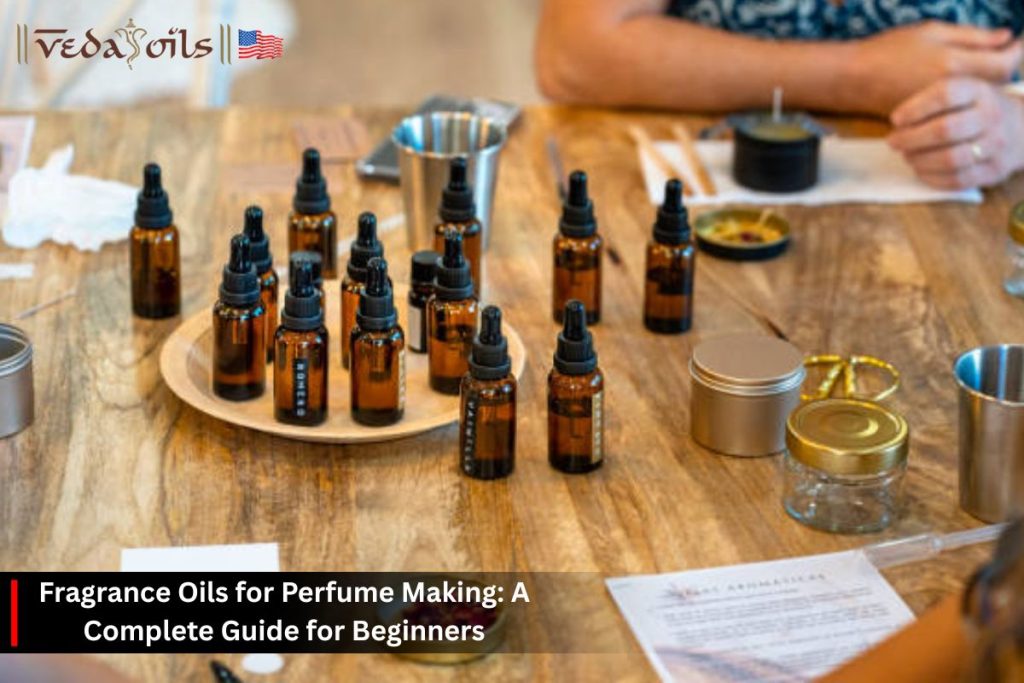
Beginners often think about how fragrance oils and other ingredients are used in the perfume-making process. The knowledge of perfume making is also key to those who want to enter the perfume-making business.
This blog covers everything from the perfume-making process to the role of the fragrance oils supplier in detail. Beginners can use this as a guide to learn the perfume-making process from scratch.
What Are Fragrance Oils?
Fragrance oils are nothing but concentrated oils extracted from either natural or synthetic sources. These oils contain aromatic compounds that have a unique scent that belongs to a particular family or category of scents. Therefore, you find fragrance oils with floral, fruity, minty, woodsy, musky, and other types of scent notes in the market.
Why Use Fragrance Oils in Perfume Making?
Fragrance oils are the key ingredients in the perfume-making process. Most perfume brands prefer them because of their:
- Consistency
Fragrance oils have a thin consistency, allowing seamless integration in the perfume–making procedures. They also retain the fragrance and do not exhibit different aromas at different times. You can also mix them with other fragrance oils and ingredients while creating perfume blends.
- Longlasting Scent
The aromatic compounds present in the fragrance oils are concentrated and retain their aroma for a long time. This increases the durability of your perfumes, which automatically makes them more appealing to your target audience.
- Versatility
Fragrance oils are versatile, meaning that they can be included in different types of perfumes. Different fragrance oils can be used for the top, middle, and base notes of the perfumes to create unique and exceptional products.
- Ease-Of-Use
Fragrance oils can be incorporated into perfume and perfume blends easily. This ease-of-use makes them the first choice of perfume brands and makers.
Choose only high-quality fragrance oils while manufacturing different kinds of perfumes. The quality of these oils determines the final effectiveness and quality of your perfumes.
Understanding Perfume Notes
Understanding how different perfume notes work together to create the final appeal and aroma of perfumes is also very important. Some important points in this context are shared below:
- Top Notes: Top notes often create the most impact as soon as you apply a perfume. Therefore, they are often strong, impactful, and may not sustain for a long time.
- Middle Notes: Middle notes sustain the fragrance of the perfume for the next few hours after application. They are usually less powerful but strong enough to make the wearer feel fresh and invigorated after their use.
- Base Notes: Base notes carry the fragrance for the longest time. They are usually mild in nature, but they help the perfume to last longer.
Types of Fragrance Oils for Perfume Making
Here are some popular varieties of fragrance oils used while formulating different types of perfumes:
- Royal Rose Fragrance Oil for Perfume
The Royal Rose Fragrance has a deep scent of roses that stays on your mind for a long time. Its deep floral scent makes it a great ingredient in luxury perfumes, especially those designed for women.
- Sandalwood Fragrance Oil
The soothing, woody, and mild herbal notes of sandalwood are perfectly in the Sandalwood Fragrance Oil. It is mostly used as a middle or heart note of the perfumes because of its longevity and calming aroma.
- Jasmine Fragrance Oil
Jasmine Fragrance Oil has a fresh scent of jasmine flowers. Its scent has a cheerful effect on the mood and is mostly used as a top note. It blends perfectly with fragrance oils with a floral or musky fragrance.
- Oceanic Mist Fragrance Oil for Perfume
The Oceanic Mist Fragrance Oil is basically an artificial fragrance oil created by blending fragrance oils of different scents. It reflects the freshness and eccentric vibe of the ocean and is mostly included in high-end perfumes and perfume blends.
- Lavender Fragrance Oil for Perfume Making
The strong invigorating effect of lavender flowers can be experienced in the Lavender Fragrance Oil. Due to its prominent scent, it is often used as a top note in different types of perfumes.
- Lemon Fragrance Oil
Lemon Fragrance Oil is used to add a citrusy twist to the perfumes. Its sharp and refreshing lemony scent makes it a popular addition in citrusy blends. This fragrance oil is mostly used as a middle note in perfumes.
- Saffron Fragrance Oil for Perfume Making
The mild, sweet, and lingering scent of saffron is perfect for luxury perfumes. Due to its subtle, creamy, and sweet fragrance, it can be used as a base note in various perfumes and perfume blends.
- Honey & Milk Fragrance Oil for Perfumes
Honey and Milk Fragrance Oil offers a classic combination of the sweetness of honey and milk. It is a perfect addition to perfumes created to offer an elegant scent with a lingering effect on the mind.
- Orchid Flower Fragrance Oil for Perfume Making
The freshness of orchid flowers can be felt in the Orchid Flower Fragrance Oil. The exotic perfume and perfume blends usually contain this fragrance oil, which has a perfect combination of deep floral notes that are both strong and sustainable.
- Mango Fragrance Oil for Making Perfumes
The tempting fragrance of ripe mangoes can be experienced in the Mango Fragrance Oils. Tropical perfumes that require a stimulating scent often contain these kinds of fragrance oils to appeal to the audience.
How to Use Fragrance Oil as Perfume?
The right steps or methods to follow while creating different kinds of perfumes using fragrance oils are shared below:
Step 1: Pick Your Preferred Fragrance Oils
Your first step should be to select the fragrance oils you want in your perfume. Pick high-quality fragrance oils that possess International Fragrance Association (IFRA) certification. With these high-quality fragrance oils, you can create safe and stable perfumes for your customers.
Step 2: Select the Carrier
A carrier helps to carry the scent of the fragrance oils in the perfume. Alcohols, carrier oils, and other types of carriers can be selected according to your perfume type and needs.
Step 3: Determine the Appropriate Concentration Level
Determining the right concentration of fragrance oils in the carrier is also a crucial step in the perfume-making process. The concentration of fragrance oils in regular perfumes may range from 20 to 40%. For Eau De Parfum (EDP), it may range from 15 to 20%.
Step 4: Combine the Ingredients
Now, you can go ahead and mix the carrier and fragrance oils in a container. Use a sanitised and clean glass container to prevent any contamination or unwanted interactions.
Alcohol-based perfumes require proper ageing so that the combined ingredients interact and blend with each other as per the requirements. This often requires several days and a cool and dark storage place. The ageing process for oil-based perfumes is relatively shorter, up to 48 hours.
Step 5: Filtration & Other Processes
After combining the perfume-making ingredients, the final blend goes through filtration and further processing. This removes any contamination and makes the perfume suitable for regular use. The final liquid is filled in a glass bottle and packaged for further use.
Step 6: User Instructions
Include application tips and a user manual so that the users understand how to apply and use the manufactured perfumes.
Step 7: Stability Tests
Before selling the perfumes in the market, check them for their stability, skin-friendliness, and overall safety. Any changes, if required, must be included in the further manufacturing batches.
Conclusion
We hope you’ve understood the perfume-making process and ingredients by now. Using the best-quality ingredients will determine the final quality of your perfumes. VedaOils is the leading supplier of fragrance oils, carrier oils, and other ingredients required for perfume-making. Their ingredients are duly tested for quality and effectiveness. Moreover, you can get them at wholesale rates and in bulk quantities from their portal. Visit their official site to explore all the varieties of fragrance oils and carrier oils available with them.