Menopause can make wrinkles around the eyes appear faster, even if you already use eye cream consistently. Hormonal changes during menopause affect collagen production, skin thickness, elasticity, hydration, and repair activity, which can make the eye area look older more quickly.
The frustrating part is that many people already have a skincare routine before these changes begin. That is why menopause skin often feels different rather than simply “drier.” The structure of the skin itself starts changing. The skin’s structure itself begins to change, making existing skincare products seem less effective. As a result, many women explore clinic-grade skincare solutions like CALECIM® Professional to help support collagen renewal, hydration, and overall skin health.
Menopause can trigger faster wrinkle formation around the eyes because collagen, skin thickness, and repair activity decline together
Menopause-related hormone changes affect several aging pathways at once. The eye area is especially vulnerable because the skin is thinner and constantly moving from blinking and facial expression.
Estrogen decline during menopause contributes to decreased collagen production, reduced elasticity, moisture loss, dryness, and wrinkling. In reference to Clinical and Experimental Dermatology, skin collagen can decline rapidly after menopause, with nearly one-third lost in the first five years.
Why crow’s feet often become more visible during hormonal change
Crow’s feet become more noticeable when repetitive facial movement combines with thinner, less resilient skin. As collagen support weakens, expression lines may stay visible longer after smiling or squinting.
Why the eye area usually ages faster than the rest of the face
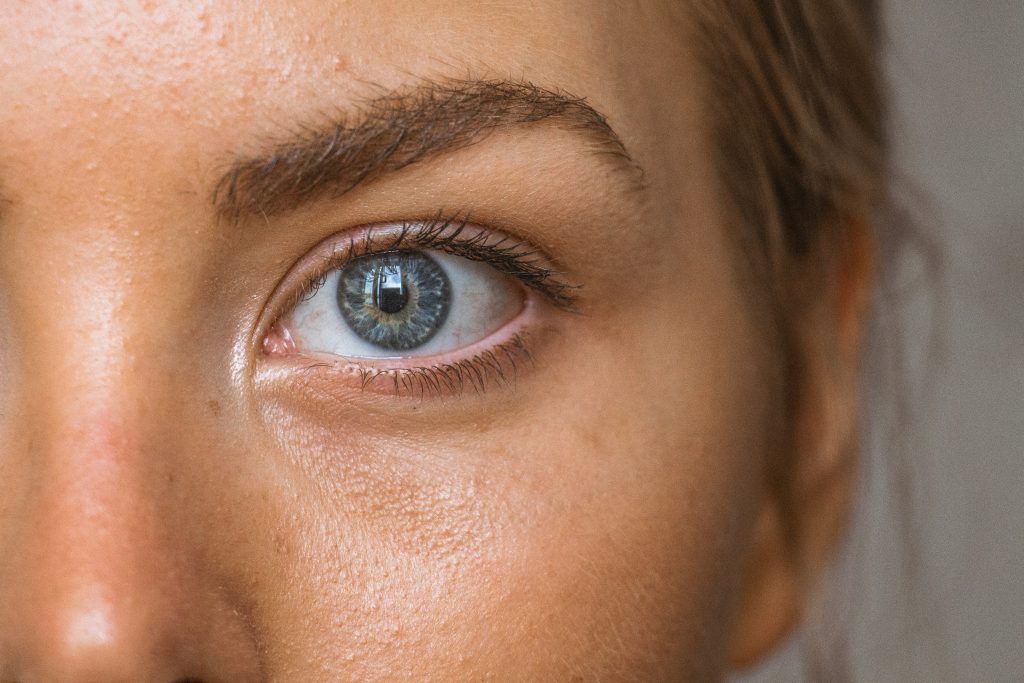
The skin around the eyes has less natural thickness and oil production than many other facial areas. Aging around the eyes involves biological processes that may differ from other facial areas.
Many eye creams stop feeling effective during menopause because hydration alone does not address structural skin changes
A moisturizing eye cream may temporarily smooth the skin surface, but menopause-related changes often go deeper than dehydration alone.
According to PMC, menopause and hormone-related changes can affect the skin’s extracellular matrix, elasticity, and structural support. This means skin may still appear crepey or fragile even when it feels hydrated.
Why moisturized skin can still look crepey or thinner
Hydration helps plump the surface temporarily, but it does not automatically rebuild collagen or improve skin density. That is why some people notice their regular eye cream suddenly “stops working.”
How menopause changes the skin barrier and extracellular matrix
The extracellular matrix helps support firmness and resilience. During menopause, declining estrogen can affect this support network, making the eye area appear thinner, looser, or less elastic over time.
The first menopause-related eye aging changes are often subtle before deeper wrinkles appear
Menopause-related eye aging usually starts gradually. Many people first notice changes in texture, firmness, or brightness before deep wrinkles appear.
Fine lines that stay visible after facial movement
Lines that once disappeared quickly after smiling may begin lingering longer. This often reflects slower skin recovery and declining elasticity.
Thinner upper eyelid skin and reduced firmness
The upper eyelid may start looking softer, thinner, or slightly heavier. Some people describe this as the beginning of “tired-looking eyes.”
Why puffiness and wrinkles can appear together
Puffiness and wrinkles are not opposites. Thinner skin can make fluid retention, dark circles, and structural weakness more noticeable simultaneously.
Under-eye wrinkles and crow’s feet can significantly influence perceived age, health, and attractiveness.
Some ingredients support menopause-related eye wrinkles better than others
Not all anti-aging ingredients target the same concerns. Some mainly improve hydration, while others focus on collagen support, barrier function, or circulation.
Peptides and collagen-support signaling
According to Frontiers in Medicine, randomized trials have evaluated peptides for wrinkles, hydration, elasticity, and skin brightness. Peptides are often used to support skin signaling involved in firmness and resilience.
Exosomes and regenerative skin communication
Exosome-related skincare is still an emerging category, but regenerative technologies are increasingly being explored for skin-quality support. CALECIM® Professional PTT-6® contains over 3,000 proteins, including growth factors, cytokines, and exosomes.
Barrier-support ingredients for fragile menopause skin
Ingredients like niacinamide and soothing antioxidants may help support barrier function when menopause skin becomes more reactive or dry.
Circulation-support ingredients for dark circles and puffiness
Caffeine has shown cosmetic potential for reducing the appearance of puffiness and dark circles, although evidence remains limited.
Hydrating eye creams, retinol products, and clinic-grade regenerative formulas work differently on menopause skin
Different eye treatments target different aging pathways. Choosing the right category depends on whether the main concern is dryness, wrinkles, puffiness, or thinning skin.
| Treatment Type | Main Focus | Best For | Limitations |
| Hydrating eye creams | Temporary moisture and smoothing | Mild dryness | Limited structural support |
| Retinol products | Cell turnover and photoaging support | Fine lines and texture | May irritate sensitive eye areas |
| Regenerative formulas | Skin-quality and repair signaling support | Thinning or fragile-looking skin | Results vary and require consistency |
| Procedures | Structural correction | Advanced aging concerns | Higher cost and downtime |
What cosmetic eye creams usually improve
Most cosmetic eye creams mainly improve temporary hydration and surface smoothness.
What repair-focused formulations are designed to support
Repair-focused formulations may aim to support skin quality, collagen signaling, and resilience over time rather than only short-term plumping.
When procedural treatments may still be considered
More advanced sagging or deeper wrinkles may still require procedural support such as lasers, injectables, or tightening treatments.
Clinic-grade eye creams may help support menopause skin when they focus on long-term skin quality instead of temporary smoothing
Clinic-grade formulas are often designed for more targeted support than standard cosmetic moisturizers.
CALECIM Professional Eye Contour Lifting Cream is designed to support thinning-looking skin around the eyes while addressing puffiness, discoloration, and crepey texture.
How CALECIM® Professional Eye Contour Lifting Cream approaches thinning eye skin
The formula combines peptides, barrier-support ingredients, circulation-support ingredients, and PTT-6® technology to support multiple eye-area concerns at once.
What PTT-6® and collagen-activating exosomes are intended to support
According to the National University of Singapore, research related to cord lining mesenchymal stem cell-conditioned media has explored effects on elastin and hyaluronic acid production in eyelid fibroblasts.
What changes may appear first?
Many people notice hydration, brightness, or smoother texture before visible firmness improvements.
Why structural skin improvements take longer than hydration effects
Hydration changes can appear quickly, while collagen-related improvements typically require longer-term consistency. According to CALECIM Professional, visible differences in product trials were observed over approximately 5 to 7 weeks, although results vary.
When to reassess whether your current eye routine is working
If the eye area continues looking thinner, more crepey, or less resilient despite consistent use, it may be worth reevaluating whether the routine is addressing structural skin support rather than hydration alone.
Best For
CALECIM® Professional Eye Contour Lifting Cream may be best for:
- Menopause or perimenopause-related eye aging
- Thin or crepey-looking eyelid skin
- Crow’s feet with dryness or fragility
- Puffiness and discoloration alongside wrinkles
Frequently Asked Questions
Can menopause make crow’s feet appear faster?
Yes. Menopause can accelerate visible skin aging by affecting collagen, elasticity, hydration, and repair activity around the eyes.
Why does my eye cream seem less effective during menopause?
Many eye creams mainly target hydration, while menopause also affects structural skin support and collagen-related pathways.
Can menopause thin the skin around the eyes?
Yes. Hormonal changes during menopause can contribute to thinner, less resilient skin over time.
Are exosome eye creams safe for sensitive skin?
Some people tolerate them well, but sensitive skin users should patch test and follow product guidance because long-term evidence is still evolving.
How long does it take to improve menopause-related eye wrinkles?
Hydration improvements may appear earlier, while firmness and texture changes often require several weeks of consistent use.
Can menopause eye wrinkles improve without cosmetic procedures?
In some cases, yes. Skincare may help improve skin quality, texture, and hydration, although advanced sagging may still require procedures.
Conclusion
Menopause can make wrinkles around the eyes appear faster because skin structure, hydration, collagen support, and repair activity change together. That is why some eye creams suddenly feel less effective during this stage of life.
For people noticing thinner, crepey-looking skin, crow’s feet, puffiness, or reduced firmness, a more repair-focused approach may be worth considering. CALECIM® Professional Eye Contour Lifting Cream is designed to support multiple menopause-related eye concerns while focusing on long-term skin quality rather than temporary smoothing alone.