
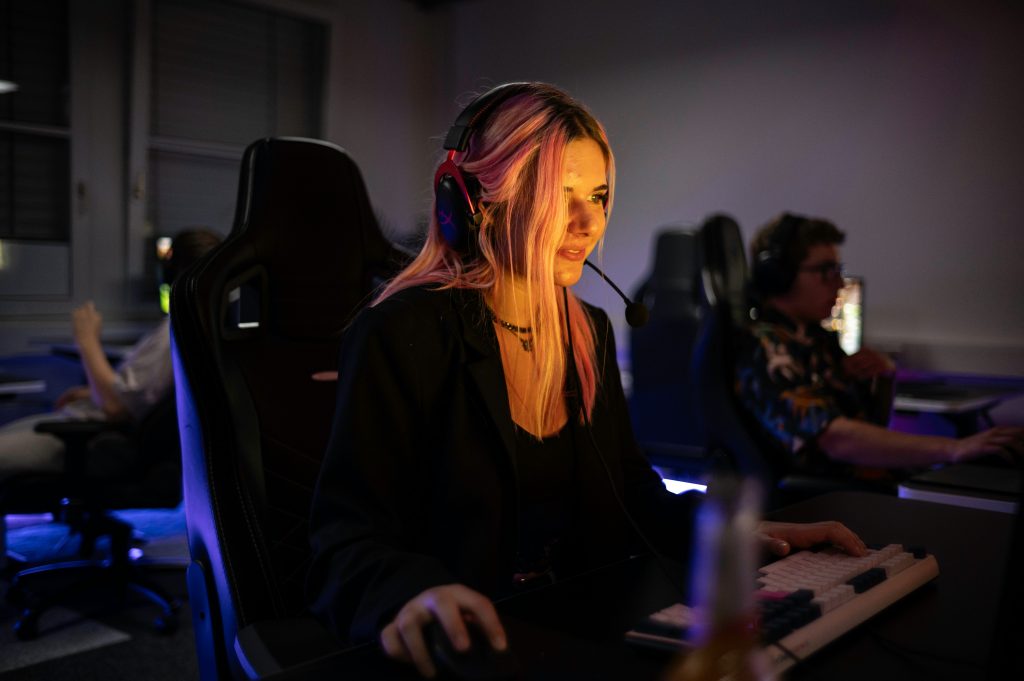
For decades, the stereotypical gamer has been male. However, as numbers of female players climbs around the world, the hobby of gaming is increasingly moving towards an even gender split. So, why exactly is this pastime becoming more popular with women? The answer lies subtle shifts that have been happening over time to make gaming more accessible and inclusive.
- The changing demographics of gamers
In the 1990s when digital gaming began in earnest, most games were made for and played by men. This trend continued into the new millennium, especially in games made for adults, despite a Games for Girls movement launching some women-focused titles. However, by the 2010s, female participation was rapidly climbing, largely thanks to the introduction of simulation games aimed at more diverse audiences.
According to the latest UK statistics, 50% of women consider themselves gamers compared to 57% of men, and there is an almost even split when you look at players by gender (48% women to 52% men). This shows that the demographics have changed rapidly since digital gaming started and are likely set to stay balanced as developers follow this trend with gender-neutral titles.
- Accessibility and the rise of casual gaming
You no longer need expensive hardware to enjoy gaming. Mobile apps and browser-based options have made it easy to play, with just a smartphone, tablet or computer to hand. This flexibility removes a major barrier, in terms of where you can play and how much you need to invest.
Smartphone gaming has triggered a trend for casual formats which enable players to enjoy short, satisfying sessions while on the go. Mechanics are simple, so no experienced or expertise with gaming is required. Casual games range from digitalised traditional favourites like 90-ball bingo and card games to simple, buildable puzzles with quick rounds and basic simulator titles.
- Community and online social spaces
Gaming increasingly doubles as a social space, not just a solo activity. Video games have enabled communication with players for years, but often solely aimed at strategizing. The expansion of online gaming has sparked an increase in live chat features within game formats and separate social spaces where you can meet likeminded individuals to chat or collaborate with on shared goals.
Niche sites and forums are the tip of the iceberg when it comes to how players can connect with one another and the games they love. Platforms dedicated to games offer video tutorials and expert tips, while communities celebrating the bigger games run in-person meet-ups and esports tournaments which can prove highly lucrative for the lucky winner. The best players in the world can do so professionally, earning a salary as an esports gamer.
- Industry recognition and development
The industry has started to recognise women as a key audience, and you can see this in the way modern games approach storytelling and character design and how titles are marketed. Developers are investing more time in researching player preferences across the board, which is helping to generate experiences that feel less stereotyped and more nuanced for men and women.
Games now offer broader themes, from career-building simulations to emotionally driven narratives, which means you can choose experiences that align with your interests rather than adapting a limited selection available. We’re also seeing more women entering the industry, changing designs and the sector direction from within.