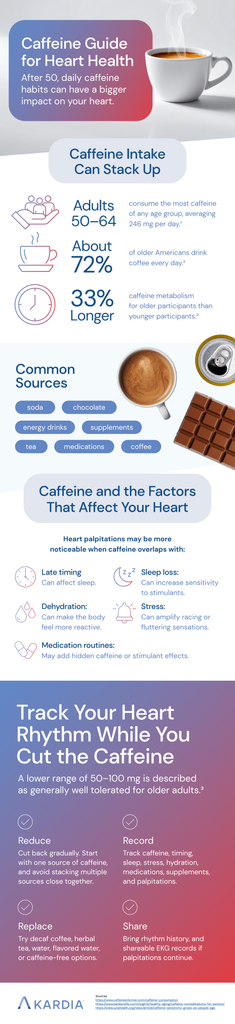

Caffeine is part of many daily routines, whether it comes from coffee, tea, soda, energy drinks, or chocolate. For most healthy adults, moderate intake can fit into a balanced diet, but caffeine also affects the cardiovascular system. It can temporarily raise blood pressure, increase alertness, and sometimes cause a noticeable heartbeat. How strongly someone responds depends on the amount consumed, personal sensitivity, medications, and existing health conditions.
Know How Much You Are Actually Drinking
The U.S. Food and Drug Administration cites 400 milligrams of caffeine per day as an amount generally not associated with negative effects for most healthy adults. That is a reference point rather than a target.
Actual intake can be difficult to estimate. An 8-ounce cup of brewed coffee may contain roughly 80 to 100 milligrams, but larger servings and brewing methods can push the amount higher. Energy drinks also vary considerably, so checking the label is useful.
Remember that caffeine adds up across the day. Morning coffee, afternoon tea, chocolate, and a caffeinated soda can contribute to the same daily total.
Pay Attention to Blood Pressure
Caffeine can cause a short-term rise in blood pressure, particularly in people who do not consume it regularly. Frequent coffee drinkers may develop some tolerance to this effect.
Someone with high blood pressure does not necessarily have to eliminate caffeine, but discussing intake with a healthcare professional can help determine what is appropriate. Measuring blood pressure before caffeine and again afterward may also provide useful information if a clinician recommends monitoring the response.
Notice Changes in Heart Rhythm
Some people feel their heart pounding or fluttering after consuming caffeine. These sensations are commonly described as palpitations.
Interestingly, moderate coffee consumption has not consistently been shown to increase arrhythmia risk in the general population. Personal response still matters. A person who repeatedly develops palpitations after an energy drink or several cups of coffee has a practical reason to reduce the amount and discuss recurring symptoms with a clinician.
Consumer devices, including a smartwatch or pocket-sized EKG, may capture rhythm information during symptoms, but readings should not replace professional medical evaluation.
Look Beyond the Caffeine
How caffeine is consumed can matter as much as the stimulant itself. Coffee loaded with added sugar or high-fat creamers creates a different nutritional picture from plain coffee or tea. Energy drinks may contain substantial sugar in addition to caffeine. Timing matters too. Caffeine consumed late in the day can interfere with sleep, and chronically poor sleep is associated with cardiovascular health concerns.
Caffeine does not affect every heart in exactly the same way. Moderate amounts are generally acceptable for healthy adults, but blood pressure, sleep, medications, pregnancy, existing heart conditions, and individual sensitivity can change the equation. Paying attention to both dose and physical response is more useful than treating caffeine as universally healthy or harmful.