
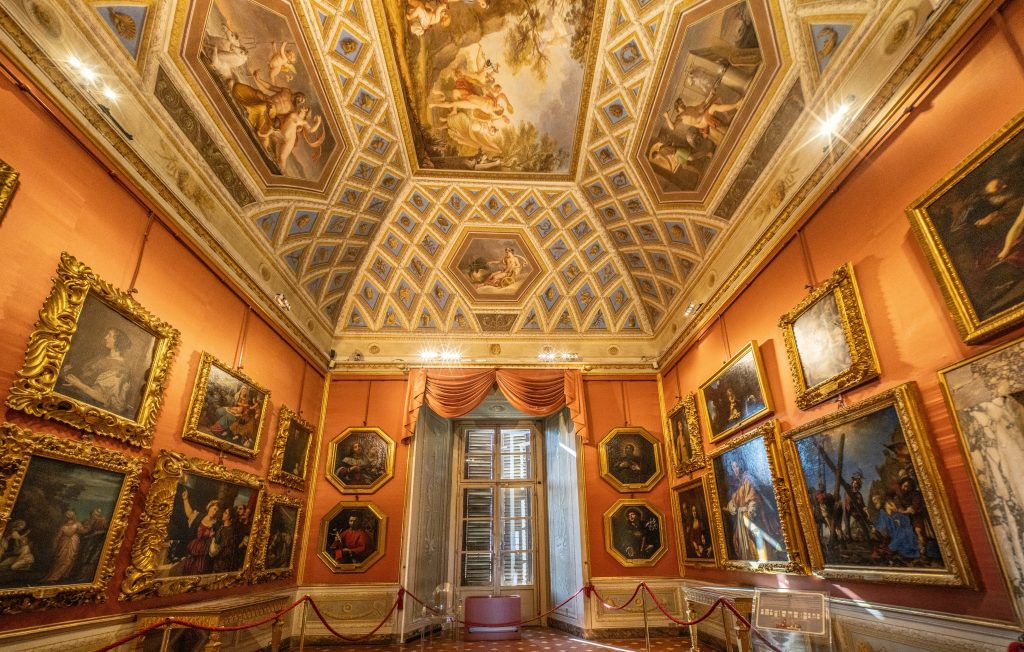
The city doesn’t present itself in a single view. It gathers slowly, through stone, shadow, and light that shifts across surfaces without settling. You notice one detail first, then another, though neither stays long enough to define the whole.
There’s a sense of height before you fully see it. Lines rising upward, then curving, then disappearing behind other structures. The shapes don’t reveal their full form at once.
Movement continues at ground level, though it feels distant from what rises above it.
Where the Dome Emerges
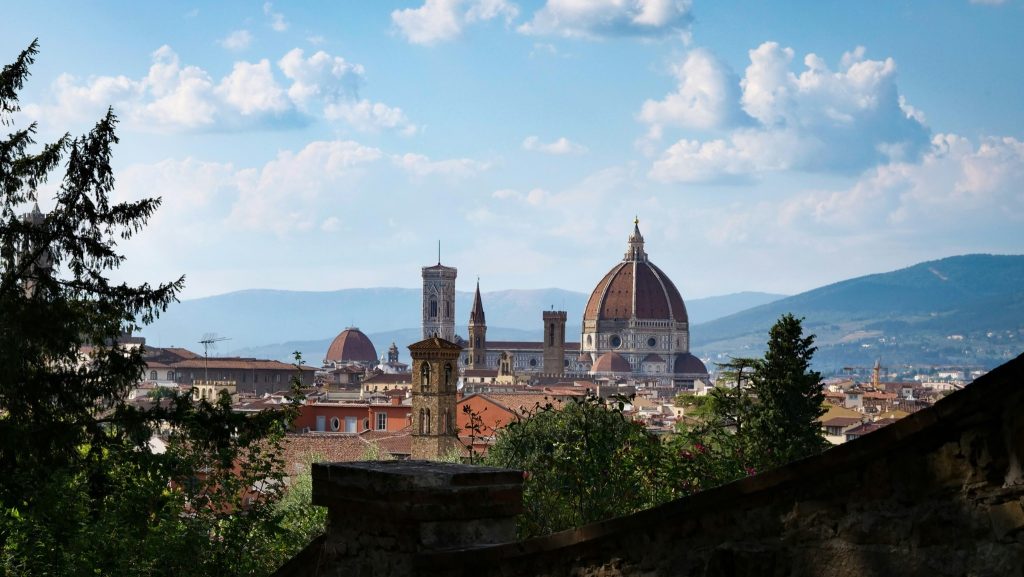
Florence builds upward in quiet ways. The streets remain narrow, the walls close, until suddenly the space opens and the dome comes into view.
It doesn’t feel immediate. The structure reveals itself in parts—the curve first, then the surface, then the full outline once you’ve stepped far enough back.
The colour holds steady at first, though it changes slightly depending on how the light reaches it. Warmer in one moment, flatter in another.
You don’t take it in all at once. The eye moves across it, then away, then returns again.
What the Surface Holds
The material doesn’t appear uniform. Sections catch light differently, creating variation that doesn’t follow a clear pattern.
Details become visible only when you look longer. Lines, edges, small shifts in texture that weren’t obvious at first.
At some point, a nearby board lists departures, including Italy trains, though the words don’t hold attention for long. They remain part of the surroundings rather than something separate.
The structure continues to hold its place.
Between Space and Structure
Walking through the city changes the view constantly. The dome disappears behind buildings, then returns again from another angle.
You don’t follow it directly. It appears when it does.
The streets guide movement more than the landmarks. One turn leads into another, though the direction doesn’t feel fixed.
There’s no clear sense of progression. Only continuation.
Between One Space and the Next
Movement through the city feels less contained. You pass through open areas, then narrower ones, then open again.
There’s no consistent rhythm to it. It adjusts with each space.
The Naples to Rome train is brought up in passing, then slips away into the surrounding noise.
The city continues without marking a clear direction.
Movement That Carries Forward
Later, or somewhere along the way, the rhythm shifts slightly. The streets widen. The spaces open, though not all at once.
The transition isn’t marked clearly. It happens in small adjustments that build over time.
You notice it only after it has already begun.
Where the City Expands
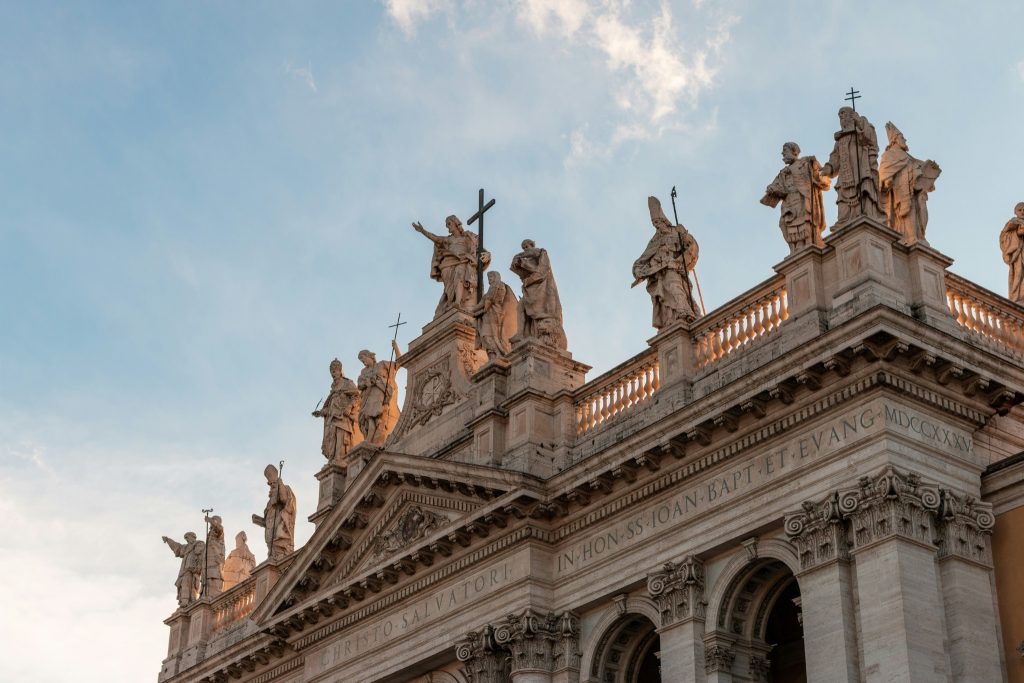
Rome doesn’t gather in the same way. It spreads.
The structures don’t sit as closely together. The space between them becomes more noticeable, though it doesn’t feel empty.
The surfaces change as well. Stone remains, but the detail becomes more elaborate. Shapes feel less contained, more extended outward.
Light reflects differently here. It moves across gold, then across shadow, then shifts again.
What the Ornament Holds
The detail doesn’t settle into a single point of focus. It extends across surfaces, repeating in ways that don’t feel exact.
Gold appears in fragments at first, then more fully as you look longer. It doesn’t dominate immediately. It builds.
The forms feel layered. One element sits over another, then another again, without a clear end.
Nothing asks to be taken in completely.
The Line That Continues
Distance feels different here. One space leads into another without needing to be separated clearly.
You don’t feel like you’ve arrived at a final point. Each area suggests another beyond it.
The movement carries through without interruption.
What Doesn’t Settle
The difference between Florence and Rome remains visible, though it doesn’t form a clear contrast.
One feels more contained, the other more expansive. Still, they seem connected through the movement between them.
You notice it gradually, not at once.
It doesn’t resolve into something fixed.
The Space Between Cities
The transition between them doesn’t feel like a break.
It continues in smaller changes—structure to openness, surface to detail, contained space to something wider.
Nothing interrupts it.
You don’t feel like you’ve entered something entirely separate.
A Continuation of Form
Looking back, the details don’t return in order. The curve of the dome, the spread of ornament, the shifting light across both. They don’t form a sequence.
They sit alongside each other without needing to connect directly. There is no clear ending point. It continues, in the same steady way.